



Postural Control: The Foundation for Handwriting, Attention, and Classroom Success
By Irene Hannam, MS OTR/L
Why Postural Control Matters
When children sit down to write, their hands do not work alone. Handwriting is a whole-body task that depends on the stability of the trunk (core), shoulders, and arms. This stability is called postural control, which refers to the ability to maintain an upright, stable body position during movement and task performance.
When a child’s body is stable, their hands can move more easily and precisely. When the body is unstable, children must use extra effort just to stay upright. This extra effort makes it harder to focus on writing, forming letters, and completing assignments.
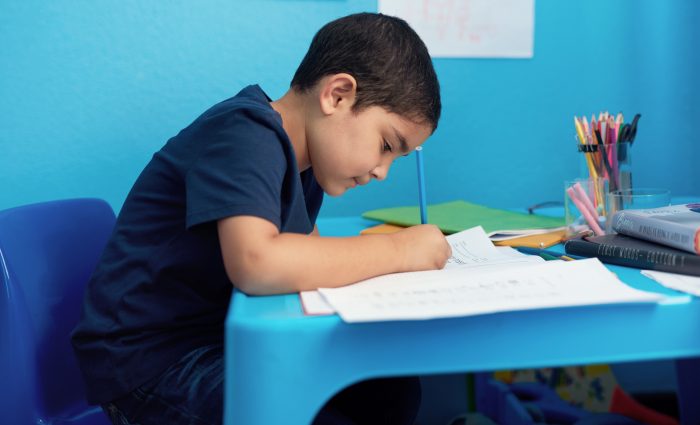
You may notice that some children slouch, lean on their desk, wrap their feet around chair legs, or support their head with their hand. These behaviors are often misunderstood as inattention or lack of motivation. In reality, they frequently reflect a child working harder than expected simply to stabilize their body.
This reflects a fundamental motor control principle known as proximal stability for distal mobility, which means that the trunk and shoulders must provide stability so the arms and hands can move efficiently (Kibler et al., 2006). When the trunk and shoulders provide a steady base, the fingers can perform precise movements needed for handwriting.
Research has shown that children with handwriting difficulties often show differences in body stability, posture, and motor control compared to their peers (Schneck & Henderson, 1990; Tseng & Chow, 2000). This means posture is not just about “sitting up straight.” It is a key foundation for handwriting, endurance, and classroom performance.
How the Body and Brain Work Together to Support Posture
Postural control is managed automatically by the brain, muscles, and sensory systems working together. This process allows children to maintain stability without consciously thinking about their body position. The brain constantly receives information from the body about position, balance, and movement. It uses this information to make small adjustments that help children stay upright and stable.
Three primary sensory systems support postural control:
• Vestibular system — provides information about head position, movement, and balance
• Proprioceptive system — provides information from muscles and joints about body position and force
• Visual system — provides feedback about body orientation in space
These systems work together continuously to help the brain maintain stability.
An important component of postural control is automatic postural adjustments, also called anticipatory postural adjustments. Before a child moves their hand to write, the brain activates trunk and shoulder muscles automatically to stabilize the body. This preparation occurs unconsciously and allows the hand to perform precise movements efficiently (Riach & Hayes, 1987).
Postural control develops gradually throughout childhood. Younger children naturally demonstrate less stability because their nervous system and musculoskeletal system are still maturing. This is why younger students may lean on their desk, slouch, or frequently change position while working.
As trunk strength, coordination, and body awareness improve, children are able to maintain upright posture with less effort. This allows more energy to be directed toward handwriting, attention, and academic tasks (Assaiante et al., 2005).
How Postural Stability Supports Handwriting
Handwriting is not just a hand skill. It is a whole-body skill. When children write, their shoulders, arms, wrists, and fingers all work together. For these smaller muscles to move smoothly, the body must first provide a stable base.
When a child’s trunk and core are stable, the shoulders and arms can stay steady. This allows the fingers to move with better control, helping children form letters clearly and efficiently. When the body is unstable, children must use extra effort just to hold themselves upright. This makes it harder for their hands to do precise work and can lead to fatigue more quickly.
Research shows that children who struggle with handwriting often have differences in body stability and motor control compared to their peers (Schneck & Henderson, 1990; Tseng & Chow, 2000). Studies have also found that proper seating and body positioning can improve handwriting legibility, efficiency, and endurance (Parush et al., 1998).
When children have good postural stability, it supports:
• Clear and accurate letter formation
• Better pencil control
• Faster and more efficient writing
• Greater endurance during writing tasks
• Less fatigue
When postural stability is reduced, handwriting may appear messy, slow, or inconsistent because children must use additional effort to stabilize their body while writing. This increased physical and cognitive effort can reduce writing endurance, contribute to fatigue, and negatively affect handwriting performance and classroom participation (Feder & Majnemer, 2007; Tseng & Chow, 2000).
Observable Classroom Signs of Poor Postural Stability
Occupational therapists and teachers can often identify postural instability through observable behaviors.
Common signs include:
• Slouching or collapsing posture
• Leaning heavily on the desk
• Supporting head with hand
• Frequent position changes
• Wrapping feet around chair legs
• Switching hands during writing
• Complaints of fatigue during writing
• Sliding forward in chair
• Reduced writing endurance
These behaviors represent compensatory strategies children use to increase stability when their postural control system is not yet fully efficient.
Children may rely on external supports because internal trunk stability is not yet fully developed (Assaiante et al., 2005).
Research Evidence Supporting the Role of Postural Control in Handwriting
Strong research evidence supports the relationship between postural control and handwriting performance.
• Schneck and Henderson (1990) demonstrated that body positioning and proximal stability are key components of handwriting performance.
• Tseng and Chow (2000) found that children with handwriting difficulties showed deficits in motor control, including postural stability.
• Ergonomic research has shown that appropriate seating and positioning improve handwriting efficiency and reduce fatigue (Parush et al., 1998).
• Feder and Majnemer (2007) identified postural stability as a foundational component of handwriting development in their comprehensive review of handwriting research.
• These findings confirm that handwriting performance depends not only on hand skills but on whole-body stability.
Why Postural Control Must Be Addressed in OT Evaluation and Intervention
Because postural stability directly supports fine motor control, improving postural stability often leads to improvements in handwriting performance, endurance, and attention.
If postural stability is inadequate, children may demonstrate handwriting difficulties that cannot be fully resolved by addressing hand skills alone.
Occupational therapy interventions may include:
• Core strengthening activities
• Postural stability exercises
• Seating adjustments
• Environmental modifications
• Movement-based interventions
Improving postural stability allows children to perform fine motor tasks more efficiently and with less fatigue.
Key Takeaways:
• Postural control provides the foundation for handwriting and fine motor performance
• Proximal stability allows precise distal hand movements
• Poor postural stability increases fatigue and reduces handwriting efficiency
• Proper positioning improves handwriting performance and endurance
• Postural control should be assessed and addressed during occupational therapy evaluation
Classroom and OT Implications
Teachers and occupational therapists can support postural stability by ensuring proper seating and positioning.
Key strategies include:
• Feet supported on floor or footrest
• Upright trunk positioning
• Proper desk and chair height (desk surface at approximately elbow height when seated)
• Movement breaks to support postural endurance
• Paper positioning
These are evidence-based ergonomic principles (Parush et al., 1998).
These supports improve handwriting performance, attention, and classroom participation. Postural control is not simply a comfort issue. It is a foundational component of academic success.
References:
• Assaiante, C., Mallau, S., Viel, S., Jover, M., & Schmitz, C. (2005). Development of postural control in healthy children: A functional approach. Neural Plasticity, 12(2–3), 109–118. https://doi.org/10.1155/NP.2005.109
• Feder, K. P., & Majnemer, A. (2007). Handwriting development, competency, and intervention. Developmental Medicine & Child Neurology, 49(4), 312–317. https://doi.org/10.1111/j.1469-8749.2007.00312.x
• Kibler, W. B., Press, J., & Sciascia, A. (2006). The role of core stability in athletic function. Sports Medicine, 36(3), 189–198. https://doi.org/10.2165/00007256-200636030-00001
• Parush, S., Levanon-Erez, N., & Weintraub, N. (1998). Ergonomic factors influencing handwriting performance. Work, 11(3), 295–305. https://doi.org/10.3233/WOR-1998-11306
• Riach, C. L., & Hayes, K. C. (1987). Maturation of postural sway in young children. Developmental Medicine & Child Neurology, 29(5), 650–658. https://pubmed.ncbi.nlm.nih.gov/3666328/
• Schneck, C. M., & Henderson, A. (1990). Descriptive analysis of grip position and body position in handwriting. American Journal of Occupational Therapy, 44(10), 893–900. https://doi.org/10.5014/ajot.44.10.893
• Tseng, M. H., & Chow, S. M. (2000). Perceptual-motor function of school-age children with slow handwriting speed. American Journal of Occupational Therapy, 54(1), 83–88. https://doi.org/10.5014/ajot.54.1.83

