

Description
Modified Paper Trial: Find the Handwriting Paper That Works Best
Choosing the right handwriting paper shouldn’t be guesswork. The Modified Paper Trial gives teachers, occupational therapists, and parents a practical, structured way to compare handwriting paper options and select the one that best supports a student’s clear, efficient, and comfortable writing.
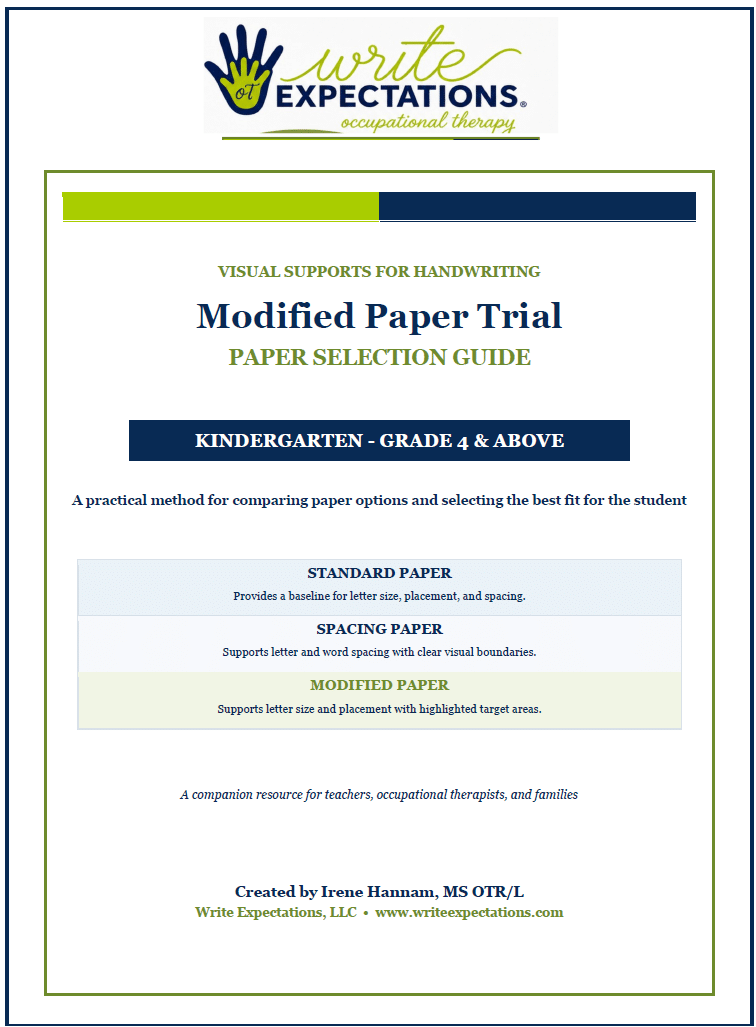
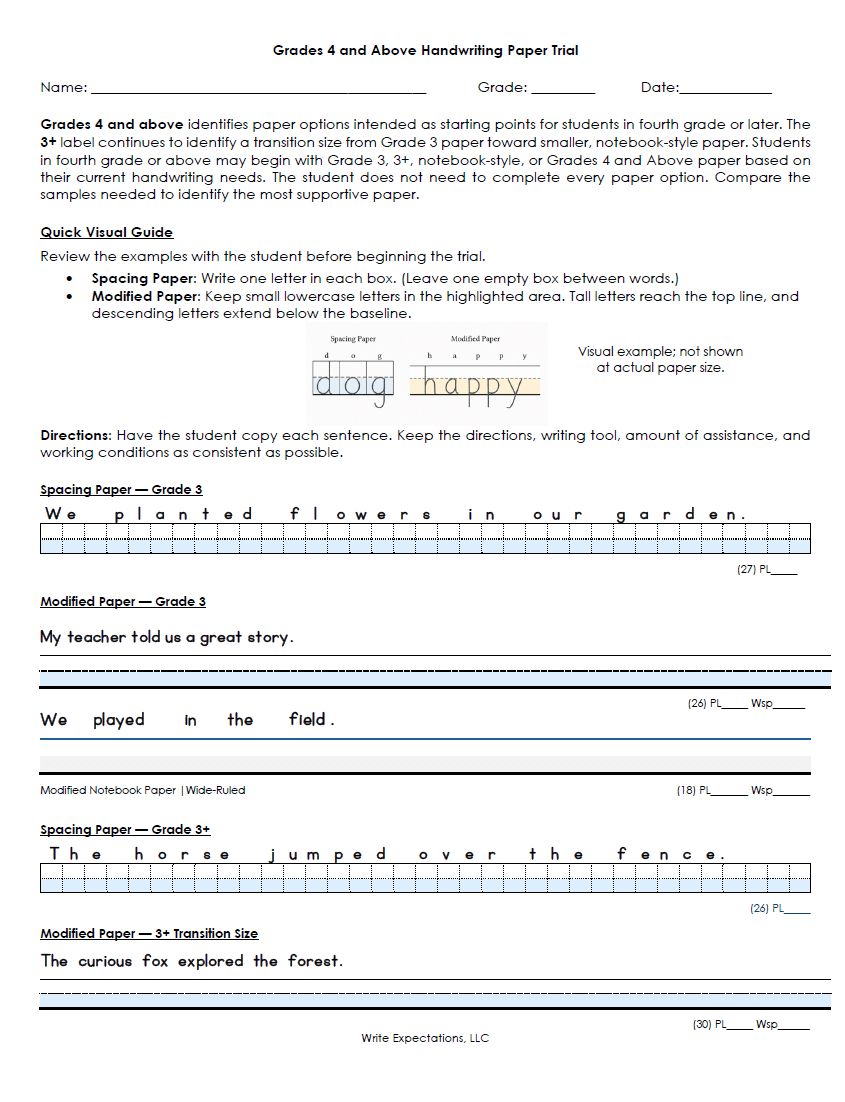
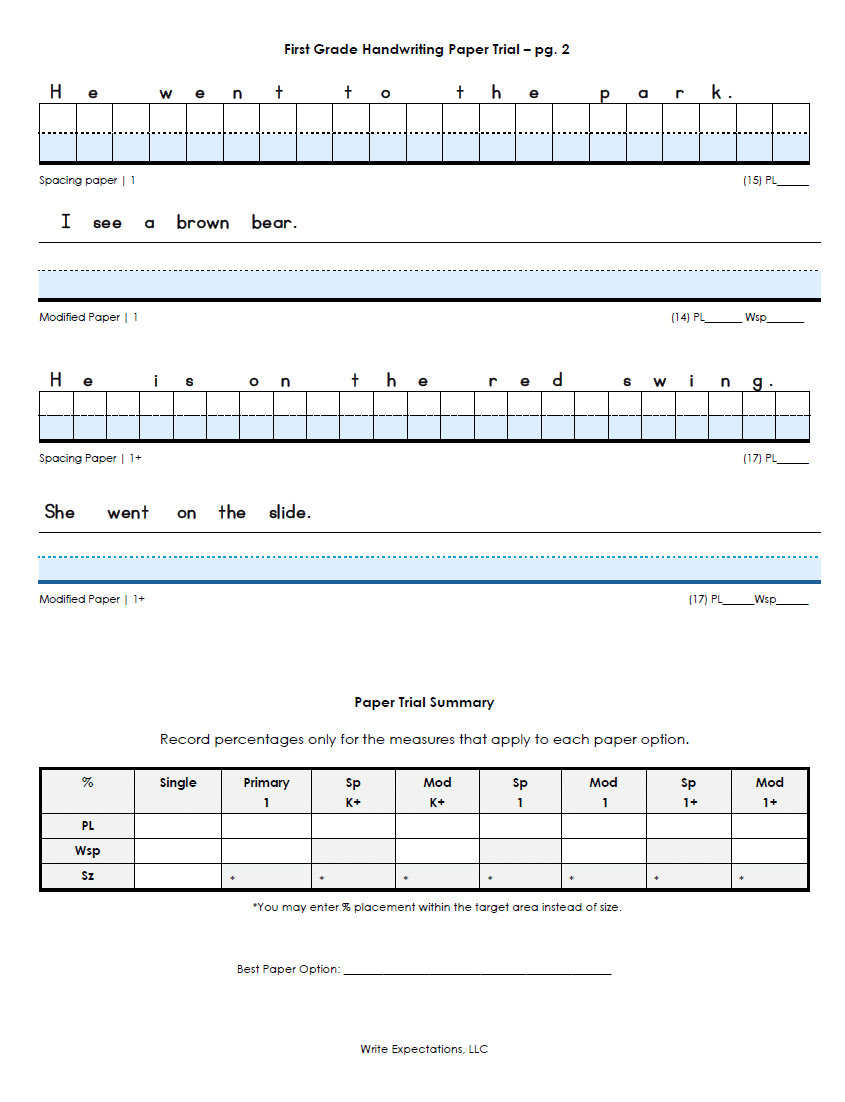
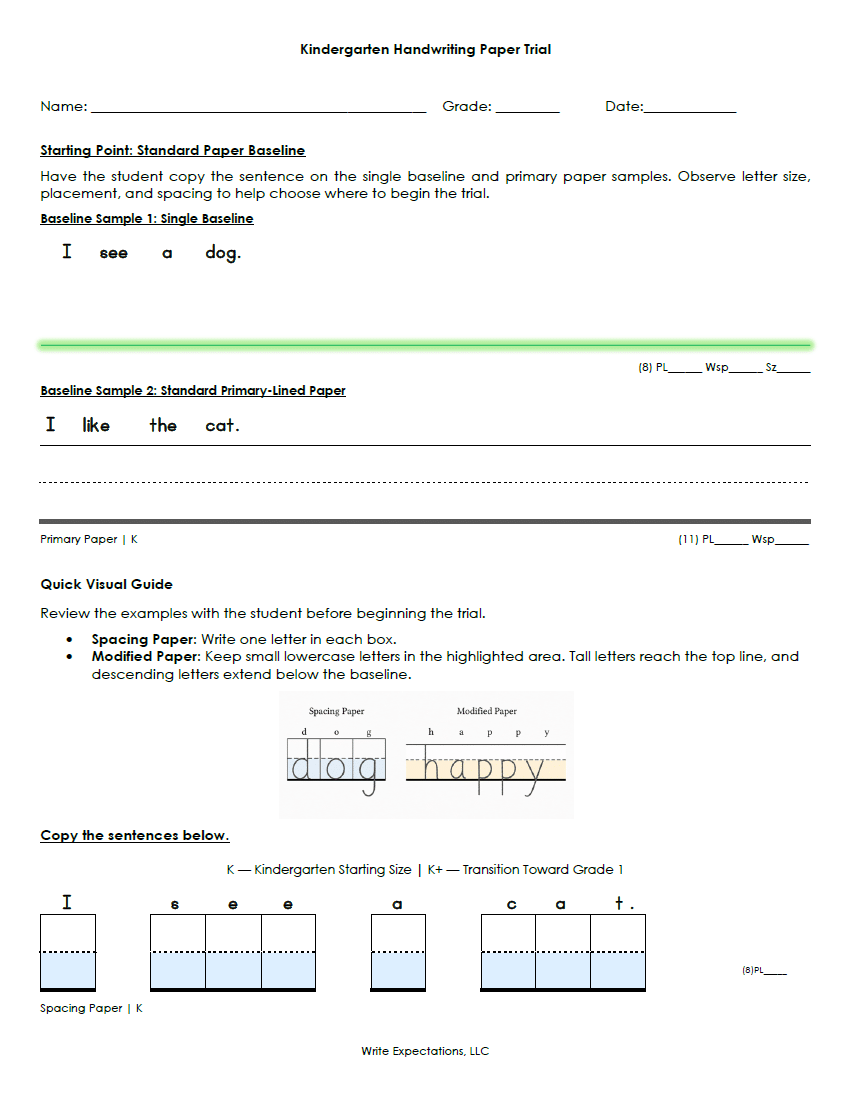
Created by Irene Hannam, MS, OTR/L, this printable paper selection guide includes writing tasks on three types of paper:
- Standard paper, a baseline for letter size, placement, and spacing
- Spacing paper, which supports letter and word spacing with clear visual boundaries
- Modified paper, which supports letter size and placement with highlighted target areas
What’s Included
- Directions for completing and comparing the trial
- Trial pages for Kindergarten, Grade 1, Grade 2, Grade 3, and Grades 4 & Above
- Baseline samples on single-baseline and primary-lined paper
- Transition sizes (K+, 1+, 2+, 3+) for a gradual move toward smaller writing spaces
- Wide-ruled and college-rule modified notebook paper samples
- A Paper Trial Summary chart on every page
- Optional occupational therapy scoring for placement, word spacing, and size
- An “Understanding the Paper Labels” quick-reference page
- Printing directions for accurate sizing
How to Choose Handwriting Paper for a Student
Start with the section that matches the student’s grade, then have the student copy the baseline sentences on standard paper. Next, compare their writing on spacing and modified paper. Observe whether letters fit the writing space, sit correctly on the baseline, and have clear spaces between words. Also note legibility, pace, effort, independence, and the student’s own preference. Select the paper that supports the most readable writing with the least unnecessary prompting.
Heading (H2): Grade Labels Are Starting Points, Not Limits
A student doesn’t have to use the paper labeled for their grade. A fourth grader may write best on a third-grade size, and a third grader may benefit from a larger writing space. Paper is a tool, and adjusting it doesn’t mean a student is behind. The “+” sizes provide gradual steps toward smaller, notebook-style paper.
Who It’s For
- School-based occupational therapists
- Classroom, resource, and special education teachers
- Handwriting interventionists and tutors
- Parents and homeschool families
Important Information
This is an informal observation and paper-selection tool, not a standardized assessment or diagnostic instrument. Optional scores are informal and specific to this trial. Concerns that significantly affect participation may require evaluation by a qualified professional. For best results, use it with the Write Expectations Modified Paper Packet and print at 100% (Actual Size).