

Description
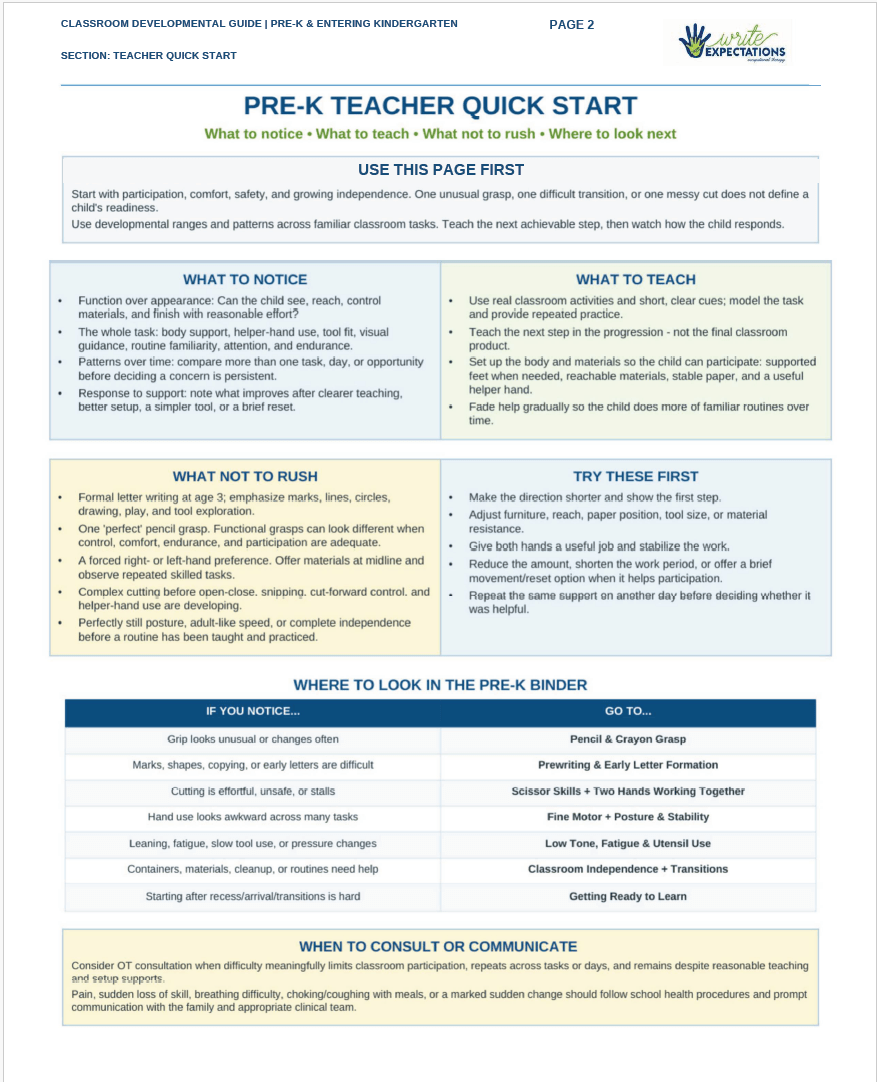
A practical, evidence-based classroom guide that helps teachers know what to notice, what to teach, what not to rush, and when to ask for help.
Created for: Pre-K teachers, early childhood educators, school-based OTs, special educators, interventionists, and preschool teams.
This is not a worksheet bundle or a readiness test. It is an OT-informed developmental decision guide built around function, participation, classroom supports, and broad developmental ranges.
What Is Inside
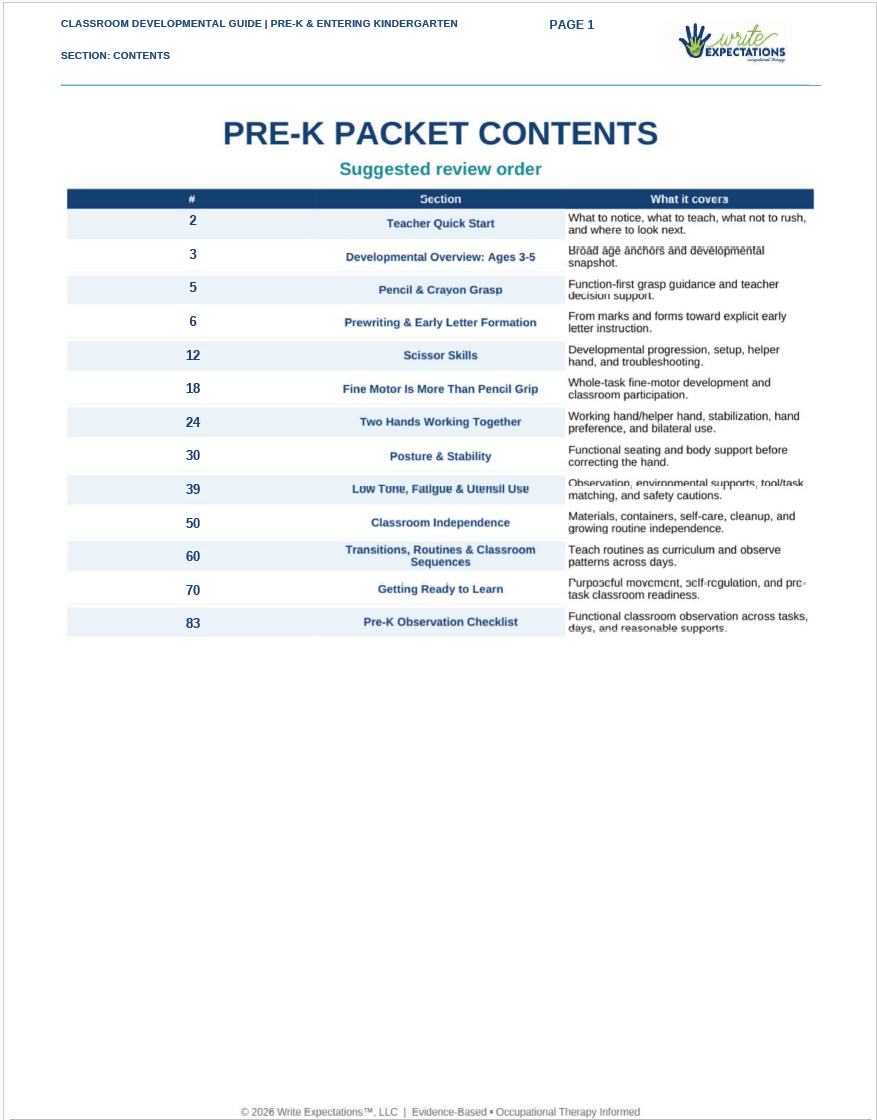
85-page PDF (cover + 84 numbered pages).
Teacher Quick Start and developmental overview for ages 3–5.
Pencil & crayon grasp.
Prewriting & early letter formation.
Scissor skills, including functional grasp and body-position visuals.
Fine motor development beyond pencil grip.
Two hands working together / helper-hand use.
Posture & stability.
Low tone, fatigue & utensil use.
Classroom independence.
Transitions, routines & classroom sequences.
Getting ready to learn / regulation and participation.
Pre-K observation checklist.
Research-informed practice notes, teacher quick references, and references.
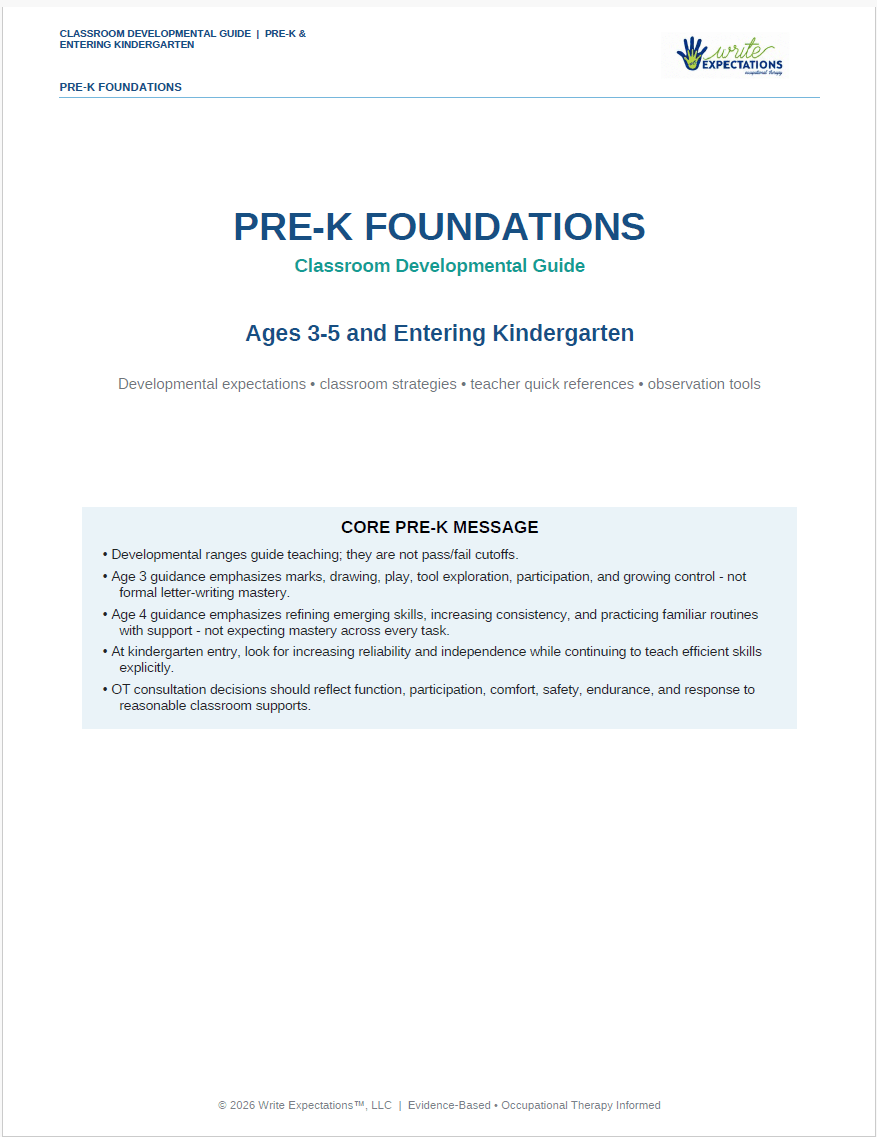
CORE PRE-K MESSAGE
• Developmental ranges guide teaching; they are not pass/fail cutoffs.
• Age 3 guidance emphasizes marks, drawing, play, tool exploration, participation, and growing control – not formal letter-writing mastery.
• Age 4 guidance emphasizes refining emerging skills, increasing consistency, and practicing familiar routines with support – not expecting mastery across every task.
• At kindergarten entry, look for increasing reliability and independence while continuing to teach efficient skills explicitly.
• OT consultation decisions should reflect function, participation, comfort, safety, endurance, and response to reasonable classroom supports.